
What it is
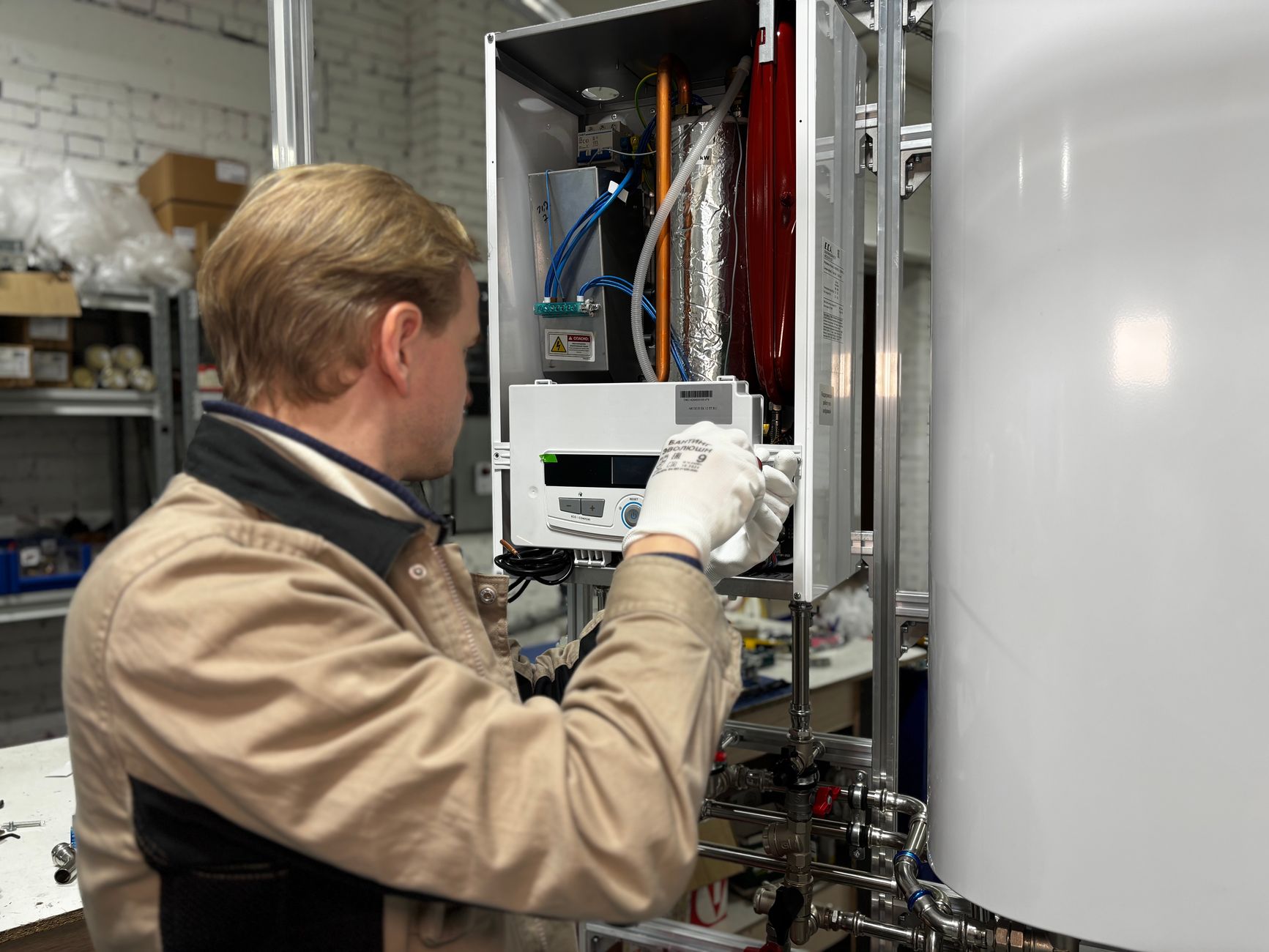
A tankless gas water heater warms water only at the moment of use. Cold water enters the unit, passes through a heat exchanger fired by gas burners, and leaves at the temperature you set. There is no stored volume, so there is no standby heat loss.
What is included
- Technical survey and sizing report
- Equipment with invoice and manufacturer warranty
- Gas and plumbing materials
- Gas line tightness test
- Written handover and usage guidance
How it works
Site survey
We measure flow rate at each fixture, available water pressure and the gas type on site (LPG or natural gas).
Sizing
We calculate the capacity in litres per minute required for the number of fixtures that may run at the same time.
Installation
We run the gas and water lines, the flue for combustion gases and the electrical protection to code.
Commissioning
We set inlet gas pressure and outlet temperature, then test every fixture with you present.
Frequent questions
What capacity do I need?
It depends on how many fixtures can run simultaneously. One shower plus a sink usually calls for 15 to 20 litres per minute; homes with several bathrooms need a larger unit or more than one.
Is a flue really required?
Yes. Gas appliances produce combustion gases that must be vented outside through a correctly sized flue. Running one without proper venting is a carbon monoxide risk.
Will it work with low water pressure?
Tankless units need a minimum flow to fire up. Where pressure is low we pair the heater with a booster pump.
Related
On a calendar
Preventive maintenance
Scheduled servicing of heating, boosting and hot water distribution.
How it works
Ready when you are
Pool and spa heating
Heating for pools, spas and hydromassage, with scheduling automation.
How it works
Silent, steady pressure
Residential boosting
Pressure boosting designed for low noise and constant delivery.
How it works