

What it is
Heating a pool is about surface heat loss, not just volume. We size the system from exposed area, wind exposure, cover use and target temperature, then choose between solar, a heat pump or a gas heat exchanger.
What is included
- Pool heat-loss calculation
- Heating equipment
- Hydraulic integration with bypass
- Temperature sensors and scheduling
- Guidance on thermal covers
How it works
Heat balance
We calculate losses through evaporation, radiation and conduction for your pool and site.
Technology choice
We compare solar, heat pump and gas on both installation and running cost.
Integration
The heater is tied into the existing plant room and filtration loop with a bypass.
Automation
We program schedules and target temperature to keep running cost under control.
Frequent questions
Solar or heat pump?
Solar has almost no running cost but depends on sun and roof area. A heat pump guarantees temperature on any day with moderate electricity use.
Is a thermal cover necessary?
It makes a large difference. Most pool heat loss is evaporation at the surface, and a cover cuts that dramatically.
Can large pools be heated?
Yes, with correct sizing. On large pools, solar combined with a backup is usually the most balanced solution.
Related
Done once, done right
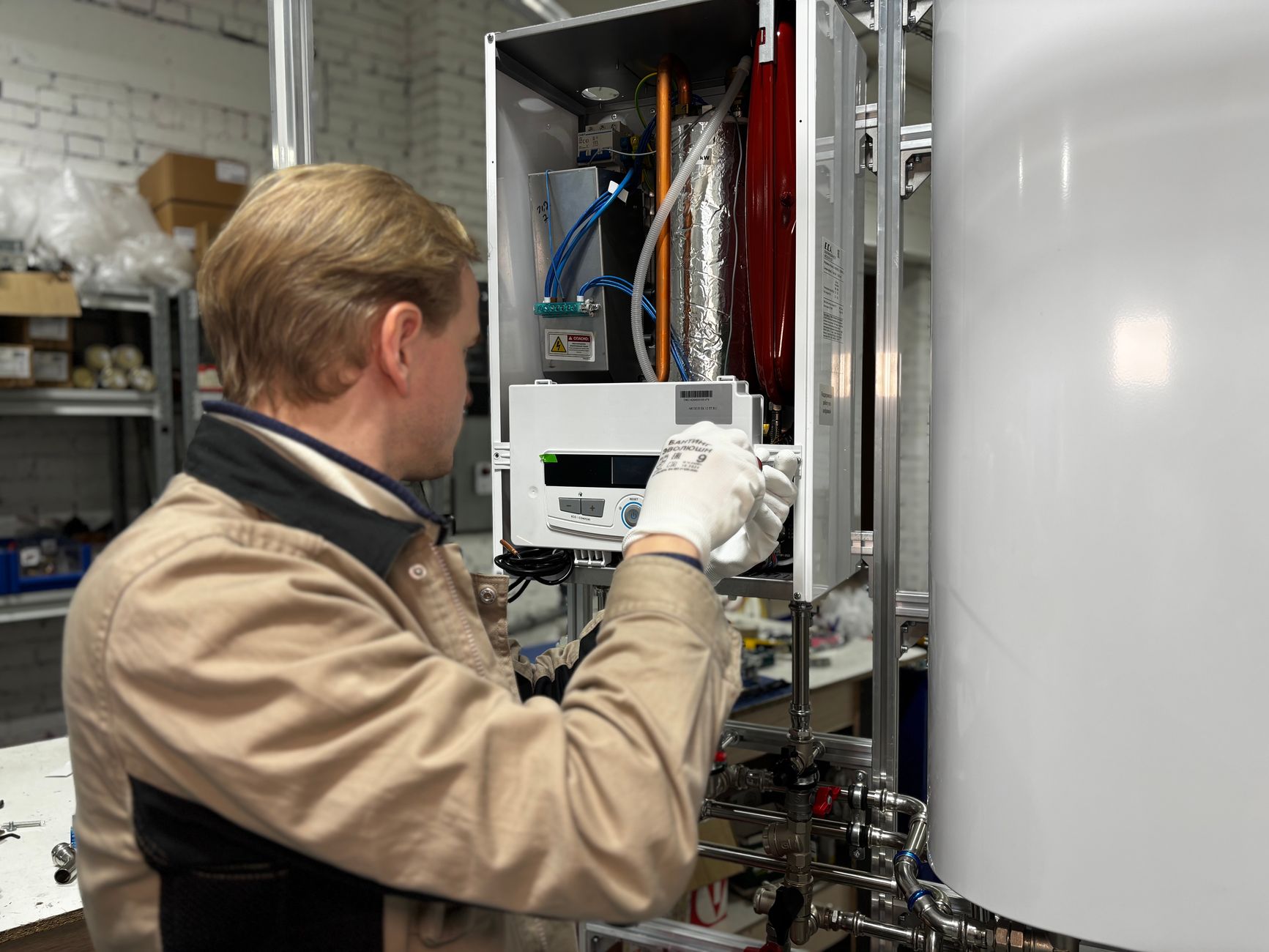
Heater installation
Installation and replacement of gas water heaters, including flue work.
How it works
On a calendar
Preventive maintenance
Scheduled servicing of heating, boosting and hot water distribution.
How it works
Silent, steady pressure
Residential boosting
Pressure boosting designed for low noise and constant delivery.
How it works